
Bio-based eTextiles carry distinct functionalities, but also unique sensorial qualities that give rise to their own emerging aesthetic dimension. Attending to this dimension matters, as it shapes how people perceive, value, and adopt new technologies.
By shaping organic, biodegradable materials into functional textile interfaces, this project observed how people aesthetically evaluate them through direct, embodied contact. The study surfaced concepts of pleasure, fragility, and mutual care, alongside a tangible imagination of more sustainable technological futures.
This empirical approach, expanded my understanding on bio-based eTextiles by including aesthetic sensibilities underlying the entanglements between the body and these novel material systems.
Link to Publication

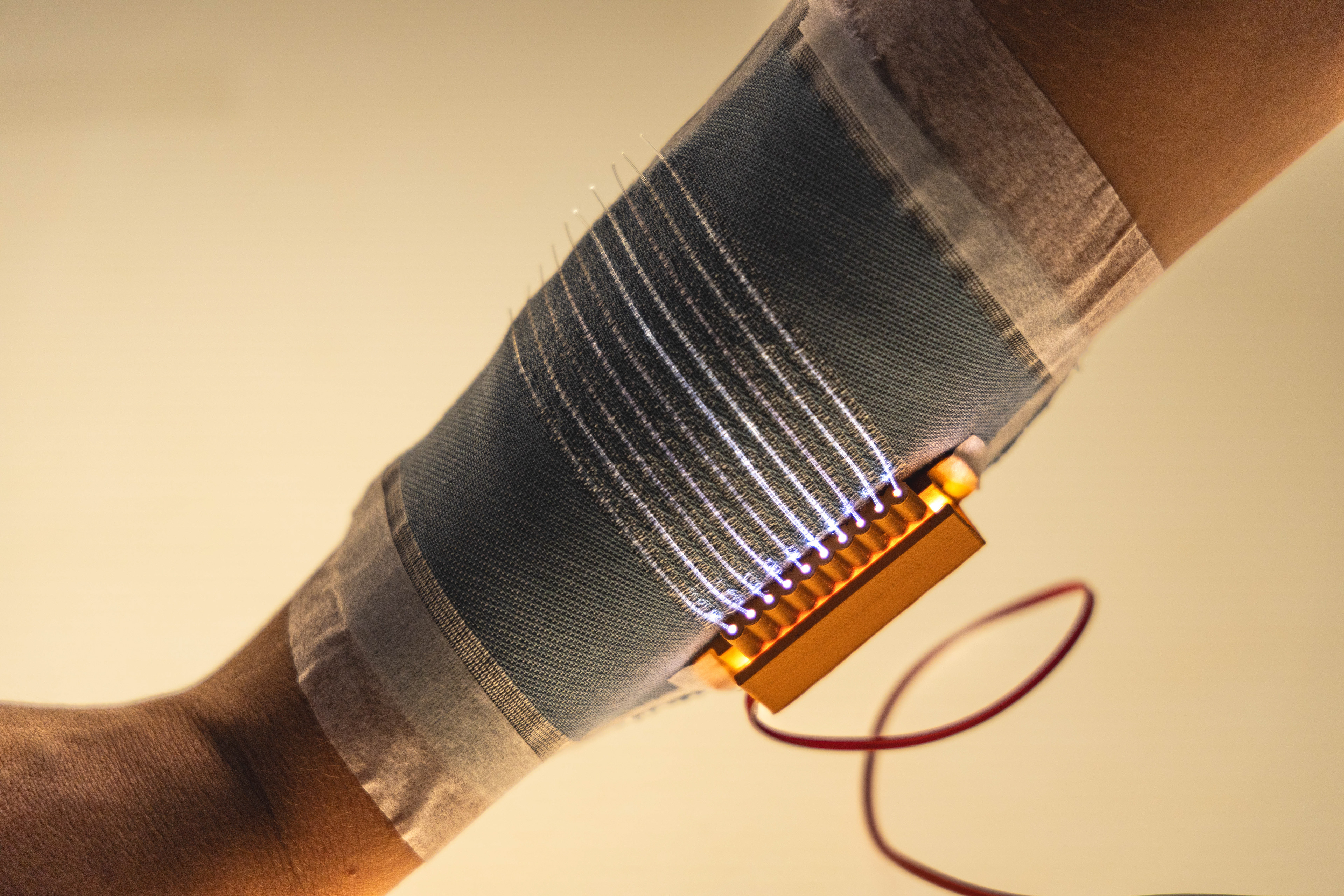
The Light Patch is a light-emitting textile device designed as a proof of concept for light therapy in medical or home settings. It’s made of pullulan optical fibres and cotton yarns.
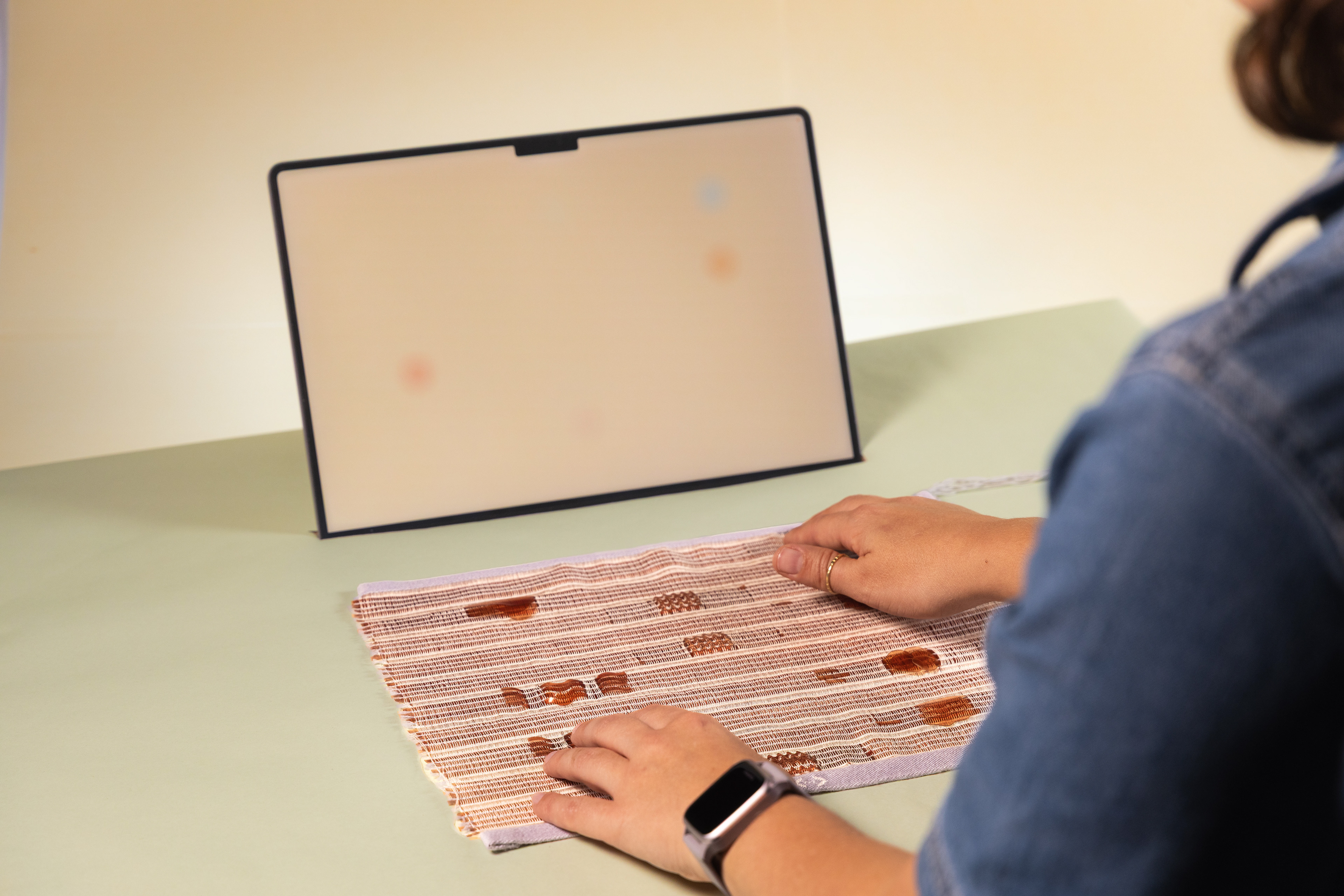
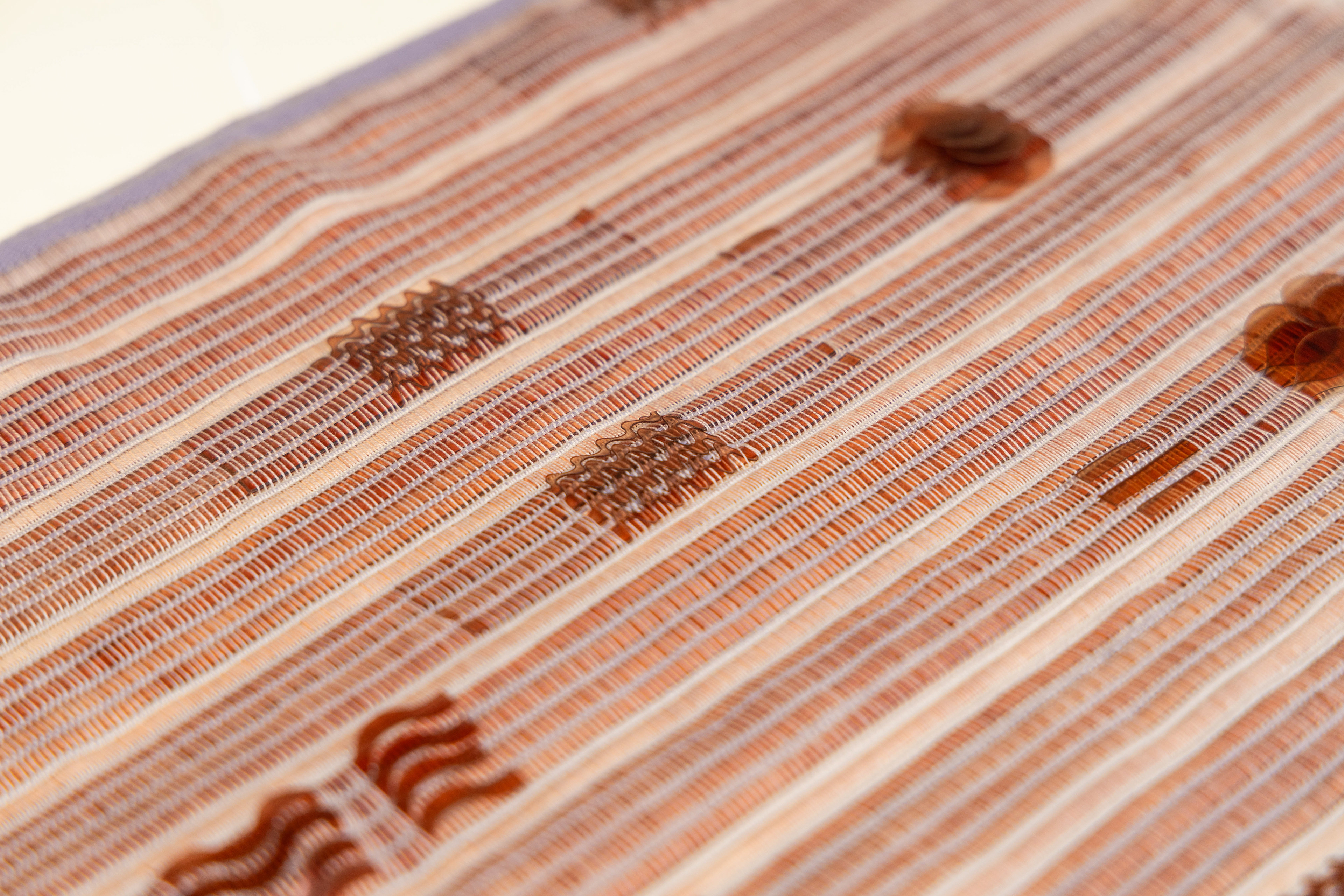
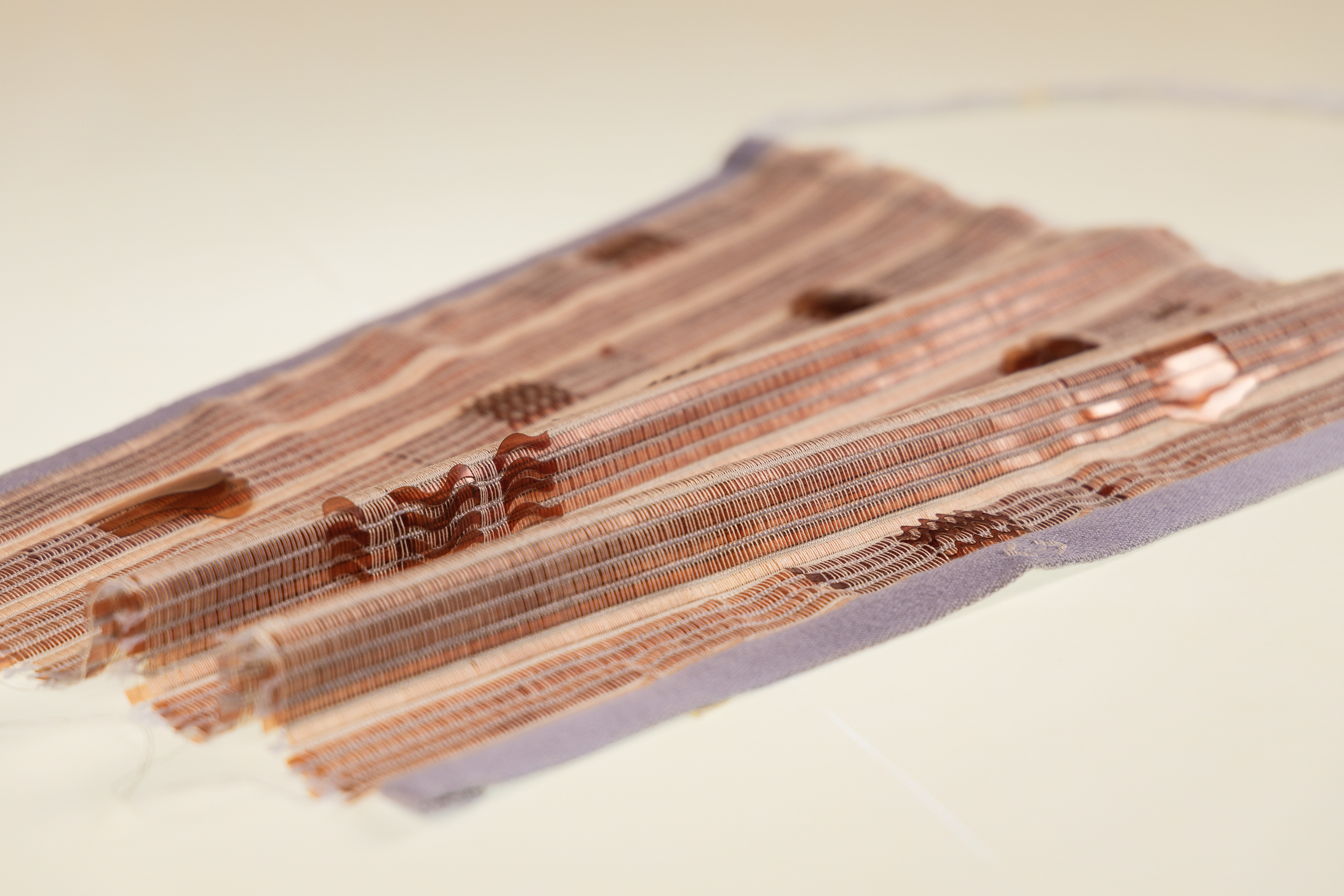
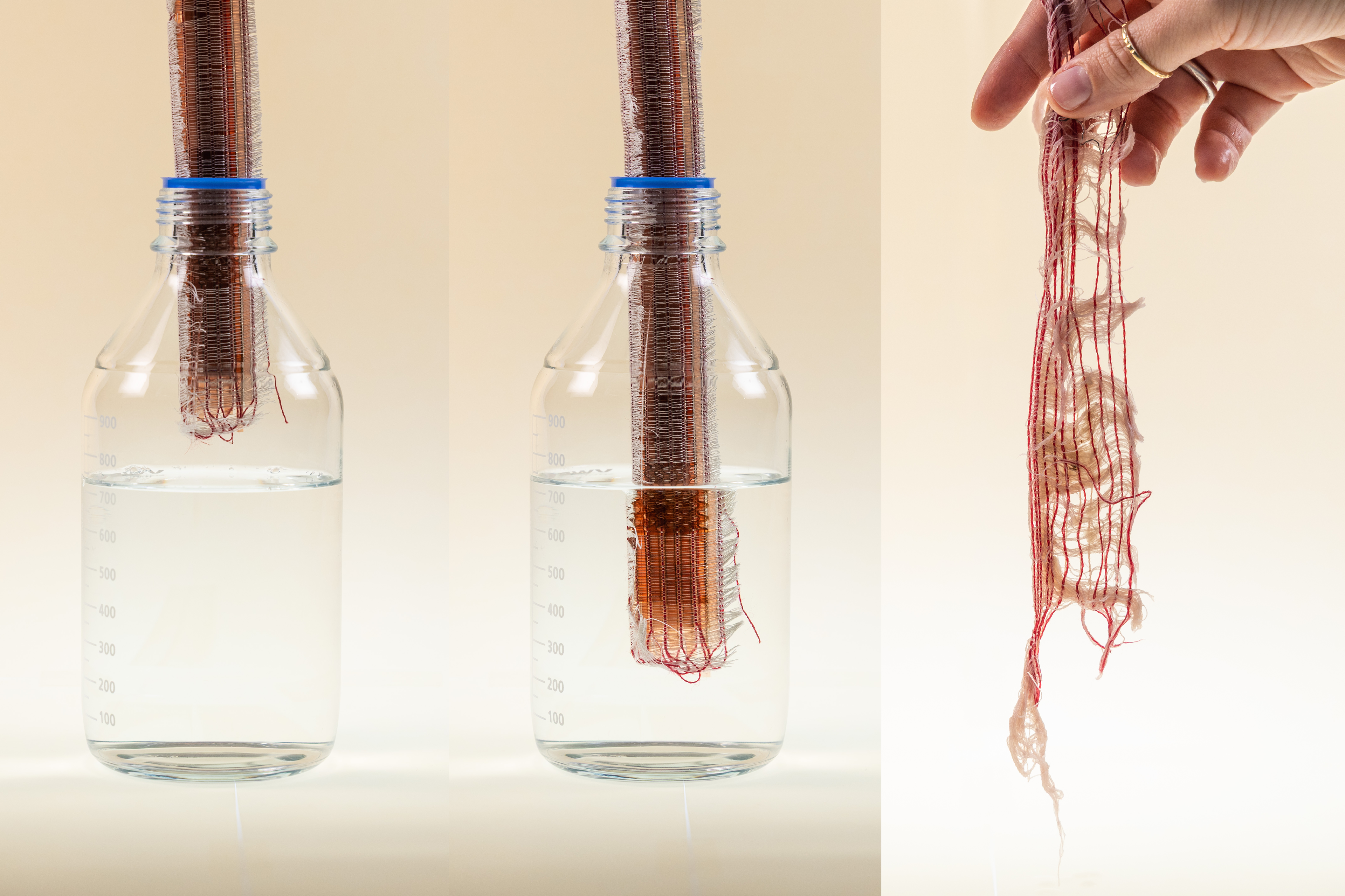
The Music Keyboard is a textile interface with ten pressure-sensor keys that can control graphics or sounds. It’s made from cellulose (CMC), wood pulp (@woamy), conductive yarns and wool yarns. The CMC was laser-cut, and everything was woven together into a multilayered weave. If it breaks, becomes obsolete, or is no longer needed (e.g., after an exhibition), it can be dissolved in water for disassembly and material reuse.

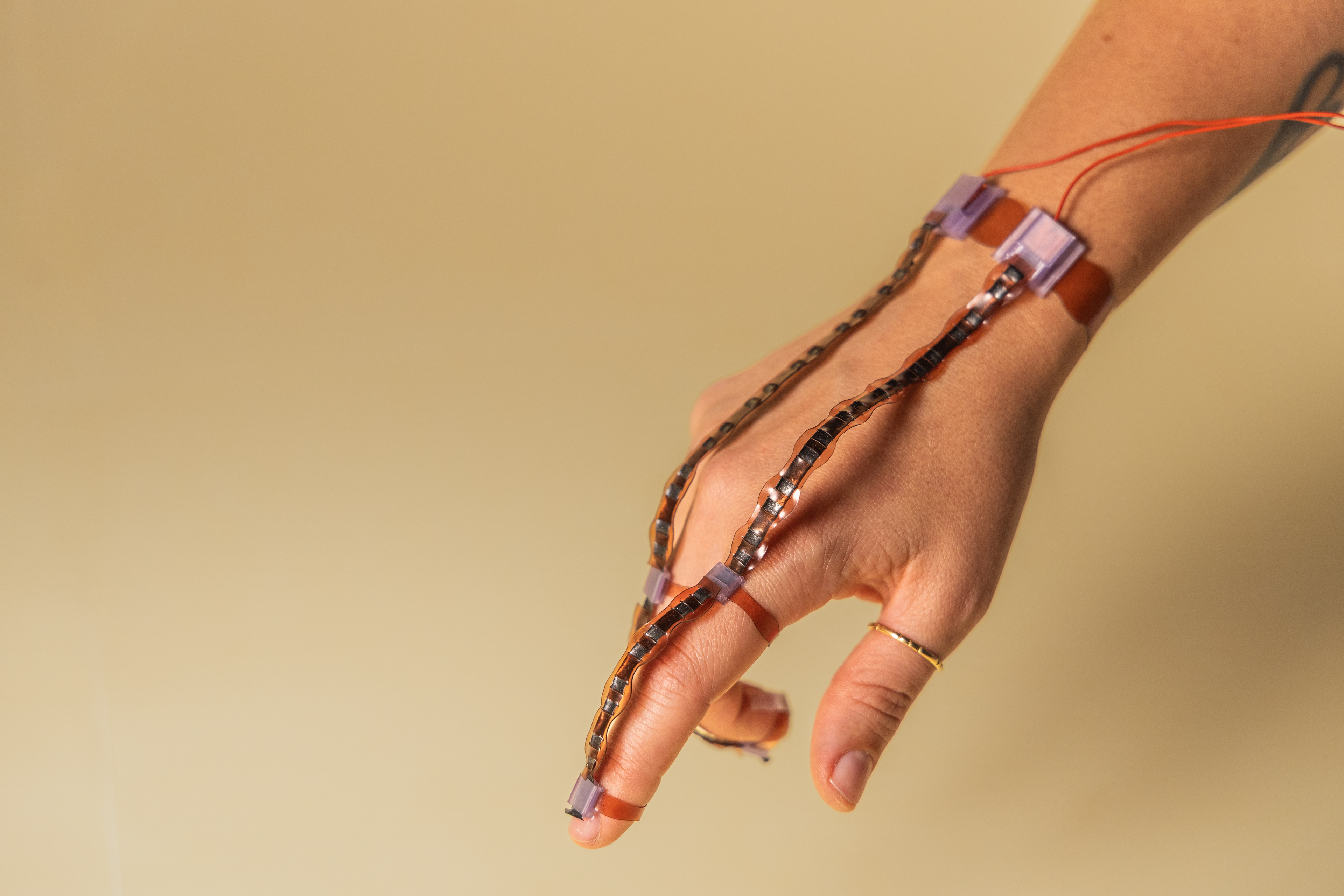
The Finger Wearable is a motion-tracking artefact worn on the hand and fingers. It is made from cellulose (CMC) and conductive graphite, and dyed with madder and spirulina. The CMC was laser-cut and assembled with 3D-printed pieces.

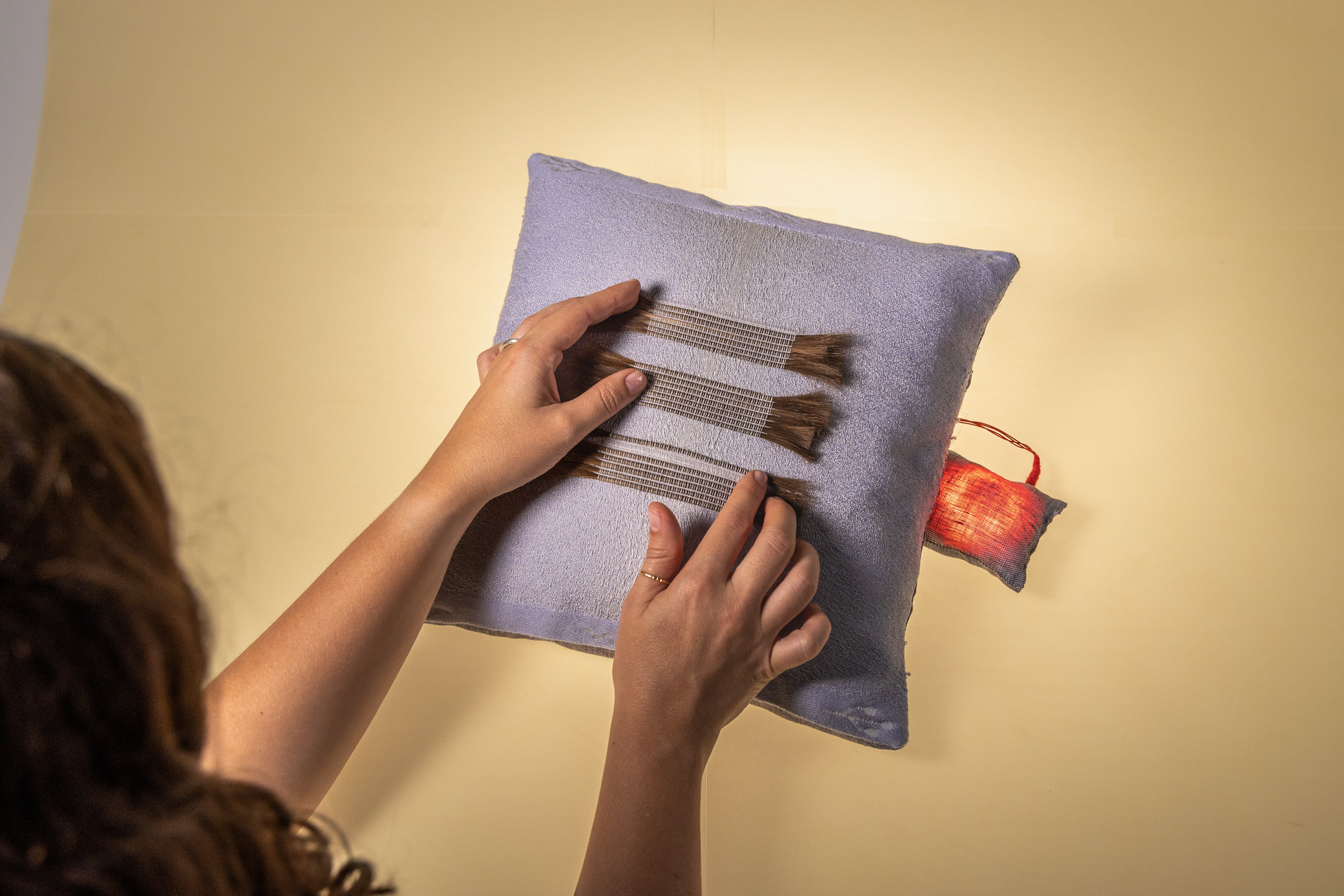
The Energy Pillow is an artefact designed to prompt reflection on generating energy through touching human hair. Its conceptual core draws on the novel use of human hair as a triboelectrically active material. This prototype is based on initial laboratory tests conducted with my colleague, Matteo Iannacchero. The pillow is made of woven wool yarns and hair, with an internal circuit and a small LED light-reactive “cushion”.


